Italo Calvino in his book, Invisible Cities1, describes the city of Tamara as a melange of symbolisms. He constructs a vivid imagery of the city being shielded by its unusual use of symbols and signages that distract and barricade its visitors from truly understanding the reality of Tamara.
Tamara is where things are not mere objects but images and signs of things representing other things.

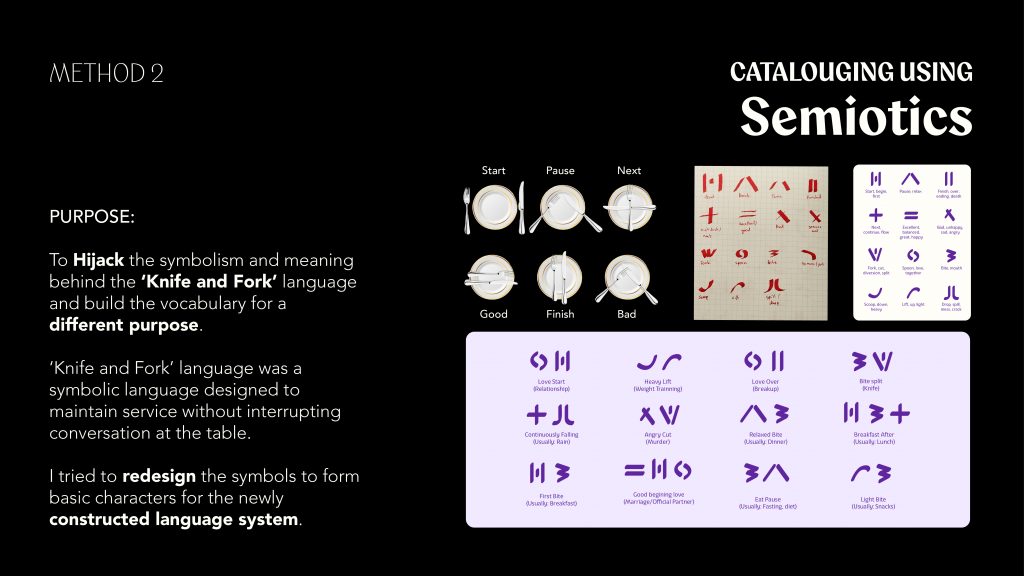
The catalogue I created in response to this seeks to mirror and extend Calvino’s semiotic world-building. It introduces time as an interpretive layer to emphasize that Tamara’s signage is shaped by historical processes and human repetition.
While signs forbid people to enter alleys with wagons or urinate behind kiosks, the signs themselves symbolize the conception of law and order in the city or the desire of people to engage in disruptive or deviant activities. Signs representing other things evolve into symbols that reflect the temperament and legacy left behind by the citizens and visitors of Tamara over many years.
Tamara is where things are not mere objects but images and signs of things representing other things that represent other things.

In this way, Tamara exists simultaneously as a city of signs and a temporal archive. Its symbols not only communicate instructions or warnings but preserve a history of human interaction while guiding future interpretations.
- Calvino, I. (1972). Invisible Cities. London Vintage.
Note: This is not a note but a symbol of the idea of completion of the written prompt.